
Preparation
Pre-flight preparation for unmanned aircraft
Key facts
Registration
> 250 g / camera
Altitude
120 m
Inspection
Before take-off
Flight
VLOS
1. Legal requirements and registration
Must register
- UAS over 250 g
- Any UAS with a camera (non-toy)
You receive
- Operator ID number
- Mark ID on aircraft or case
Before first flight
- Pick Open / Specific category
- Check geo-zones & insurance
Before flying, ensure you meet EU unmanned aircraft system (UAS) requirements:
- Registration: UAS with a camera or weighing more than 250 g must be registered as a UAS operator (in Lithuania via the national registration system / EASA).
- Category: determine whether you fly under Open, Specific, or Certified category rules.
- Insurance: civil liability insurance is recommended, especially for commercial flights.
- Flight authorisations: Specific category operations may require an operational authorisation or risk assessment.
SkrisT articles do not replace official sources — always verify current requirements with the Transport Competence Agency and EASA.
2. Airspace and zone verification
Geo-zone colour guide
Prohibited
No UAS flight without special authorisation
Restricted
Permission or NOTAM check required
Sensitive
Nature reserves, borders, infrastructure
Open (check rules)
Open category A3 if distance & altitude rules met
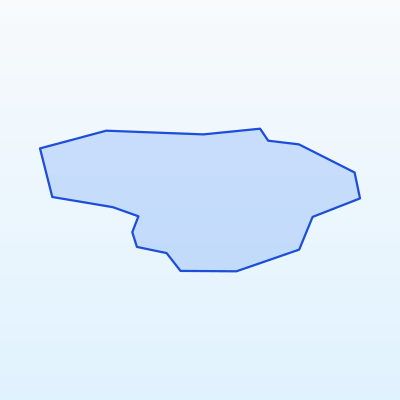
For every flight you must verify that the location is permitted for UAS operations:
- Use the official UAS geo-zone map (Lithuanian and EU level) showing prohibited, restricted, and sensitive areas.
- Check nearby aerodromes: Vilnius (VNO), Kaunas (KUN), Palanga (PLQ), Šiauliai (SQQ), Panevėžys (PNV), etc. — controlled or restricted airspace applies around them.
- Review NOTAM notices for temporary flight restrictions due to events, military exercises, or construction.
- Consider altitude: Open category A1/A3 typically up to 120 m AGL, at least 150 m from urban areas (A3).
- Avoid flying over crowds, large events, military sites, critical infrastructure, and private property without permission.
3. Aircraft technical inspection
Perform a physical UAS inspection before take-off:
- Airframe: no cracks, loose parts, or corrosion.
- Propellers: undamaged, securely attached, balanced in pairs.
- Batteries: fully charged, no swelling, clean contacts, capacity matches flight plan.
- Motors: spin freely, no unusual noise or friction.
- Camera and gimbal: securely mounted, clean lens.
- GPS / compass: calibrated, sufficient satellites (≥10 recommended).
- Firmware: latest stable version, Return-to-Home point set.
- Spare parts: extra propellers, batteries, tools.
4. Weather and environmental conditions
Weather directly affects UAS safety:
- Wind: do not exceed manufacturer limits; gusts near obstacles (buildings, trees, embankments) can suddenly increase load.
- Rain / snow: most consumer UAS are not designed for wet conditions — moisture damages electronics.
- Visibility: fly in daylight; night operations require additional authorisations.
- Temperature: cold reduces battery efficiency — plan shorter flights and keep batteries warm until take-off.
- EM interference: avoid flying very close to high-voltage lines, radio towers, or radar installations.
5. Flight plan and safety plan
A professional approach means a clear plan before starting motors:
- Route: draw the flight area on a map, mark emergency landing spots.
- Altitude and distance: respect category limits; VLOS (visual line of sight) — keep the aircraft in sight at all times.
- Observer: use a second person as observer in complex locations.
- People and animals: maintain safe distance, inform anyone on the ground.
- Emergencies: know how to activate RTH, abort the flight, or land manually.
- Records: log flight date, location, weather, and equipment used — useful for disputes or incidents.
6. Pre-take-off checklist
Legal & zones
- Registration valid
- Geo-zone map checked
- NOTAM reviewed
Aircraft
- Propellers & frame OK
- Battery charged
- GPS & RTH set
Environment
- Wind within limits
- VLOS maintained
- Emergency landing spots marked
Short checklist — review before every flight:
- Registration and category match the operation
- Geo-zone map checked, NOTAM reviewed
- Permission to fly over private land obtained (if required)
- Aircraft, batteries, and propellers inspected
- GPS calibrated, RTH set, firmware updated
- Weather suitable (wind, rain, visibility)
- Flight area marked, emergency spots identified
- Observer ready (if needed)
- Phone / radio link working
- Insurance valid (if applicable)
Safe flight begins not in the air — but on the ground.